
Table of Contents
- What Makes Turbo Parts Durable for Street Racing
- Turbocharger Maintenance Tips for Longevity
- How to Prevent Turbo Failure in Street-Driven Cars
- Best Turbocharger Brands for Street Racing
- Supporting Mods That Keep a Turbo Alive
- Budget vs Reliability: Where to Spend and Where to Save
- Frequently Asked Questions
Last Updated: September 30, 2026
What Makes Turbo Parts Durable for Street Racing
Durable turbo parts for street racing survive repeated heat cycles, stop-start traffic, and inconsistent maintenance, not just wide-open-throttle pulls, which is why we focus on durable turbo parts at Flako Performance House.
Street Conditions vs Track Conditions
Track cars see high boost in short, controlled bursts, then cool down in a paddock. Street cars see the opposite: a daily-driven turbo sits in traffic, heat-soaks at idle, then gets a full-throttle merge onto the highway. That constant temperature resistance test kills compressors.
The core difference comes down to thermal cycling:
- Track: consistent load, consistent cooldown, scheduled maintenance
- Street: unpredictable load, heat soak at every red light, maintenance that slips
- Result: street turbos often fail earlier despite seeing less total boost
The Parts That Fail First
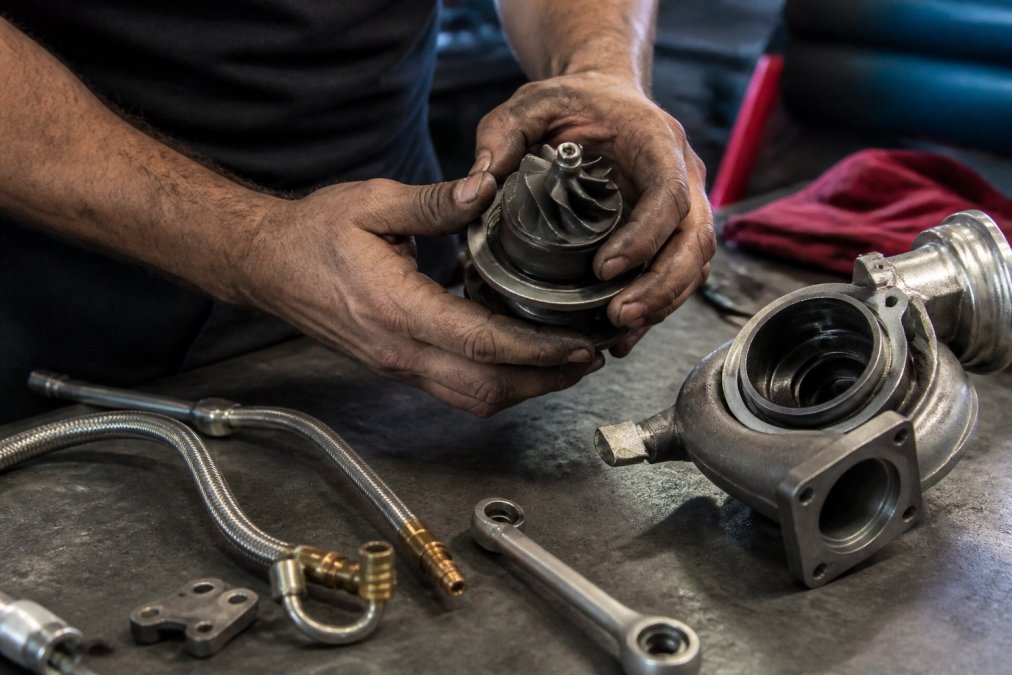
The turbine and compressor wheels usually fail before the housing. Journal bearing turbos wear their bearings first; ball bearing units survive longer but still suffer oil starvation and heat soak. Wastegate actuators, oil feed lines, and silicone couplers round out the list.
Turbocharger Maintenance Tips for Longevity
Turbocharger maintenance tips for longevity start with two habits: clean oil and disciplined warm-up and cool-down.
Oil Change Intervals and Oil Quality
Shorten your oil change interval versus a naturally aspirated engine. Turbo engines shear oil faster, especially on E85 fuel system setups where fuel dilution and higher cylinder pressures accelerate breakdown. Change oil every 5,000 to 7,500 kilometres on a street-driven turbo car, sooner if you track it.
Warm-Up and Cool-Down Routines
Warm-up matters because cold oil doesn't flow through the oil feed lines fast enough to protect the bearings. Idle 30 to 60 seconds, then stay out of boost until oil temperature rises.
How to Prevent Turbo Failure in Street-Driven Cars
- Was the oil feed line restricted or coked?
- Did the wastegate hold target boost, or did boost creep spike it?
- Did the intercooler and cooling system keep intake temps down?
Best Turbocharger Brands for Street Racing
How to Read a Compressor Map for Street Use
A compressor map is not marketing material. It is the single most useful document for predicting whether a turbo will survive street duty. Look for three things:
- Surge line (left edge): The boundary where airflow reverses and the compressor stalls. Street cars that lug at low RPM in traffic sit close to this line. A turbo whose surge line sits far to the right will surge every time you roll into throttle at 2,000 RPM in third gear.
- Choke line (right edge): The boundary where the compressor can no longer move more air. If your horsepower goal pushes past the choke line, the turbo spins past its efficiency island and starts producing heat instead of boost.
- Efficiency islands: The concentric rings showing where the compressor is most efficient. For street use, you want your typical cruise and part-throttle operating points to fall inside the largest island, not just your wide-open-throttle peak.
Bearing Type: Journal vs Ball Bearing for Street Durability
| Bearing Type | Street Durability Notes | Failure Mode |
|---|---|---|
| Journal bearing | Tolerates brief oil pressure drops better; cheaper to rebuild | Wear from contaminated oil; coking in feed line |
| Ball bearing (dual ball bearing) | Faster spool; less oil demand at low RPM | Catastrophic failure if oil starved even briefly; not rebuildable in most cases |
For a street car, the choice is not simply "ball bearing is better." Ball bearing turbos spool faster and reduce lag, but they are far less forgiving of oil starvation, a single cold-start with thick oil and a restricted feed line can destroy the cartridge. Journal bearing units tolerate the inconsistent maintenance street cars actually see.
Housing Material and Thermal Mass
Compressor and turbine housings are typically cast aluminum or cast iron (turbine side); some performance housings use stainless steel or Inconel for the turbine side. Material matters for two reasons:
- Thermal expansion mismatch: Aluminum and iron expand at different rates. Cheap housings with poor metallurgy can crack at the flange or wastegate port after repeated heat cycles.
- Thermal mass: A heavier iron turbine housing holds more heat, which sounds bad, but it also releases heat more slowly after shutdown, reducing the thermal shock that cracks housings. Lightweight thin-wall housings cool faster but are more prone to warping.
Matching Turbo Size to Horsepower Goals
A common mistake is buying a turbo rated for 700 horsepower for a 450-horsepower street build. The turbo never reaches its efficiency range, lag increases, and the car is slower and less reliable than a properly sized unit. Choose a turbo whose advertised range brackets your realistic horsepower goal, not your dream goal. If you plan to run E85 and add supporting mods later, size for the higher number, but only if you actually intend to get there.
What to Verify Before You Buy
- Published compressor map with clearly labeled surge and choke lines
- Bearing type stated explicitly, not implied
- Housing material listed for both compressor and turbine sides
- Warranty terms that specifically address heat-related and oil-related failures
- Replacement cartridge or rebuild kit availability
If a brand cannot provide those five items, the turbo is a gamble regardless of its reputation.
Supporting Mods That Keep a Turbo Alive
Supporting mods keep a turbo alive by controlling fuel, heat, and airflow. Skip them and you're asking a turbo to survive conditions it wasn't built for. The most overlooked supporting system on a street-driven turbo car is not the intercooler or fuel system, it is thermal management inside the engine bay itself.
Fuel System and Engine Management
An E85 fuel system upgrade delivers cooler combustion and more knock resistance, reducing stress on the turbo. Pair it with a capable engine management system so manifold pressure, boost target, and timing stay within safe limits. Closed-loop boost control and knock detection can pull timing or reduce boost when intake temps climb in traffic, exactly when a street turbo is most vulnerable.
Cooling and Thermal Management
Thermal management for engine bays is the most overlooked supporting mod. Heat soak degrades intercooler efficiency, cooks silicone couplers, and shortens turbo life, and it is not just about the intercooler, but where the heat goes after you shut the engine off.
- Intercooler sizing: Upgrade the intercooler before adding boost. For street use, a bar-and-plate intercooler with good end-tank design and minimal pressure drop beats a huge tube-and-fin unit that adds lag. Size for your realistic boost level, not your maximum.
- Heat shielding: Use reflective heat shielding (aluminized fiberglass or gold reflective tape) on the underside of the hood above the turbo, on the firewall, and on any wiring or hoses within 6 inches of the hot side. This is the cheapest thermal mod you can make.
- Heat wrap and blankets: Wrap the downpipe and turbine housing with high-temp exhaust wrap or a turbo blanket. This keeps heat in the exhaust stream instead of radiating into the engine bay. On a street car, a turbo blanket is one of the highest-value durability mods available.
- Coolant line routing: If your turbo is water-cooled, route the coolant lines so convection continues to circulate coolant after shutdown. Some OEM setups use a thermosiphon effect; aftermarket setups often lose this. A turbo timer or post-shutdown cooling function on your engine management can replicate it.
- Silicone couplers: Use high-temp silicone couplers rated for constant temperature resistance (typically 500°F+ continuous). Cheap couplers harden, crack, and fail at the worst possible time, usually under boost.
- Intake air temp monitoring: Monitor intake air temps with a proper gauge or engine management system. If intake temps climb above ambient by more than 40-50°F during normal driving, your intercooler or heat shielding needs attention.
Street-Legal Emissions Compliance
A supporting mod that keeps a turbo alive is one that keeps the car on the road. Street-legal emissions compliance directly affects durability because an illegal build that fails inspection gets parked, and a parked turbo car sits with old oil and heat-soaked components. Check local regulations before removing or altering emissions equipment. In many jurisdictions, relocating or deleting a catalytic converter guarantees inspection failure, and some states require complete OBD-II readiness monitors.
Budget vs Reliability: Where to Spend and Where to Save
Spend on oil supply, cooling, and engine management. Save on cosmetic parts and non-critical accessories.
| Priority | Component | Why |
|---|---|---|
| Spend | Oil feed lines and quality oil | Prevents bearing failure |
| Spend | Intercooler and cooling system | Controls heat soak |
| Spend | Engine management system | Protects tuning parameters |
| Save | Cosmetic engine bay parts | No durability impact |
| Save | Oversized turbos beyond your goals | Adds lag, not reliability |
Frequently Asked Questions
What are the most reliable turbo brands for street racing?
Reliability comes down to bearing design, housing material, and balance quality rather than brand name alone. Journal bearing turbos tolerate heat cycling and cost less to rebuild, while ball bearing units spool faster but demand cleaner oil. Look for brands that publish compressor maps, specify turbine wheel materials, and offer rebuild kits. Flako Performance House stocks turbo-forced induction parts built to endure intense conditions, so you can compare specs directly.
What kills a turbocharger fastest in a street car?
Oil starvation and contaminated oil top the list. A restricted oil feed line, low oil level, or skipped oil changes destroys journal bearings within thousands of kilometres. Heat soak after hard driving is the second killer: shutting the engine off while the turbine is still glowing cooks the oil sitting in the bearing housing. Boost creep and surge from a poorly matched wastegate or blow-off valve also shorten turbine and compressor wheel life.
How do I choose the right turbo size for street racing responsiveness?
Match the compressor map to your horsepower target and your usable rpm range, not to the biggest number you can find. A turbo that hits full boost at 3,500 rpm feels faster on the street than one that spools at 5,000 rpm, even with a higher peak figure. Check turbine wheel size, housing A/R ratio, and whether the setup needs an electronic boost control solenoid to manage manifold pressure smoothly.
What supporting modifications are needed for a durable turbo setup?
A durable build needs more than the turbo itself. Upgraded fuel injectors and a return-style fuel system prevent lean conditions under boost. A larger intercooler and silicone couplers rated for constant temperature resistance fight heat soak. Forged internals protect the short block above roughly 400 horsepower. An engine management system with proper tuning parameters ties it together, and oil feed lines plus coolant lines should be replaced, not reused.